Price goes up
Buyers take WONTON from the seed. Positions left completely below price become fully USDC. At rebalance, that USDC is collected and redeployed beneath the new market level.
Trading stacks the buy wall and burns WONTON fees.
The wall gets fatter. The supply gets thinner.
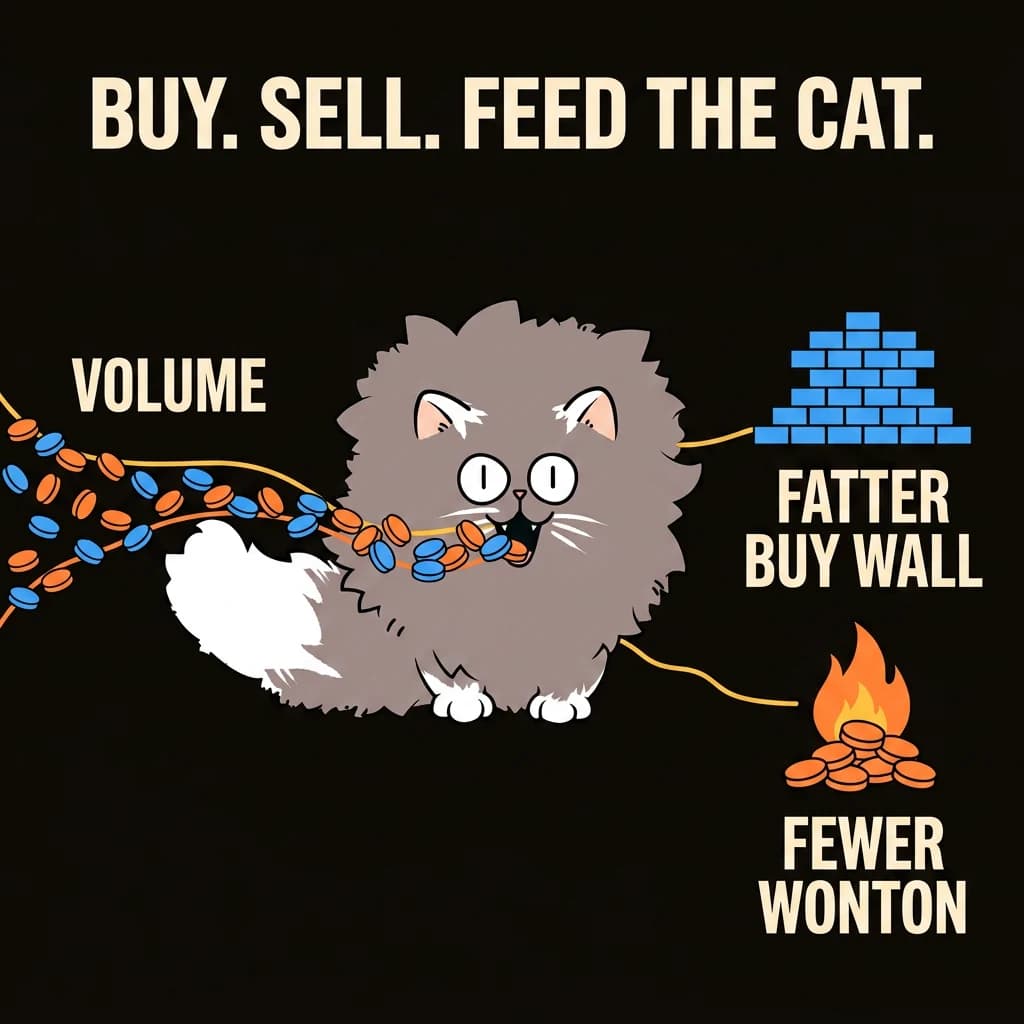
USDC goes back in.
Rebalance puts available USDC beneath the market for sellers to trade into.
WONTON gets burned.
WONTON collected as protocol fees is permanently removed from supply.
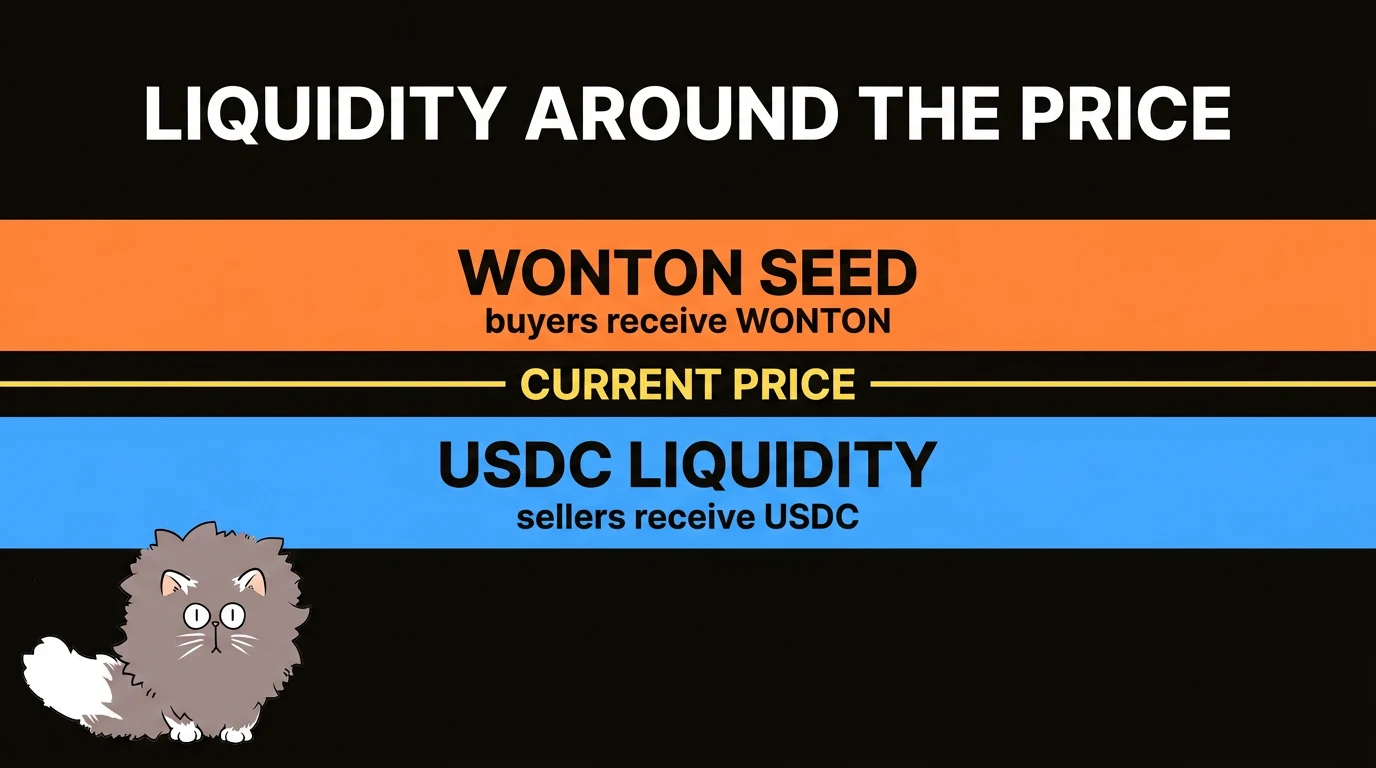
The seed position holds WONTON above the market for buyers. As price rises, buyers trade USDC for those tokens.
USDC positions sit beneath the market for sellers. As price falls through them, they trade USDC for WONTON and become mixed positions.
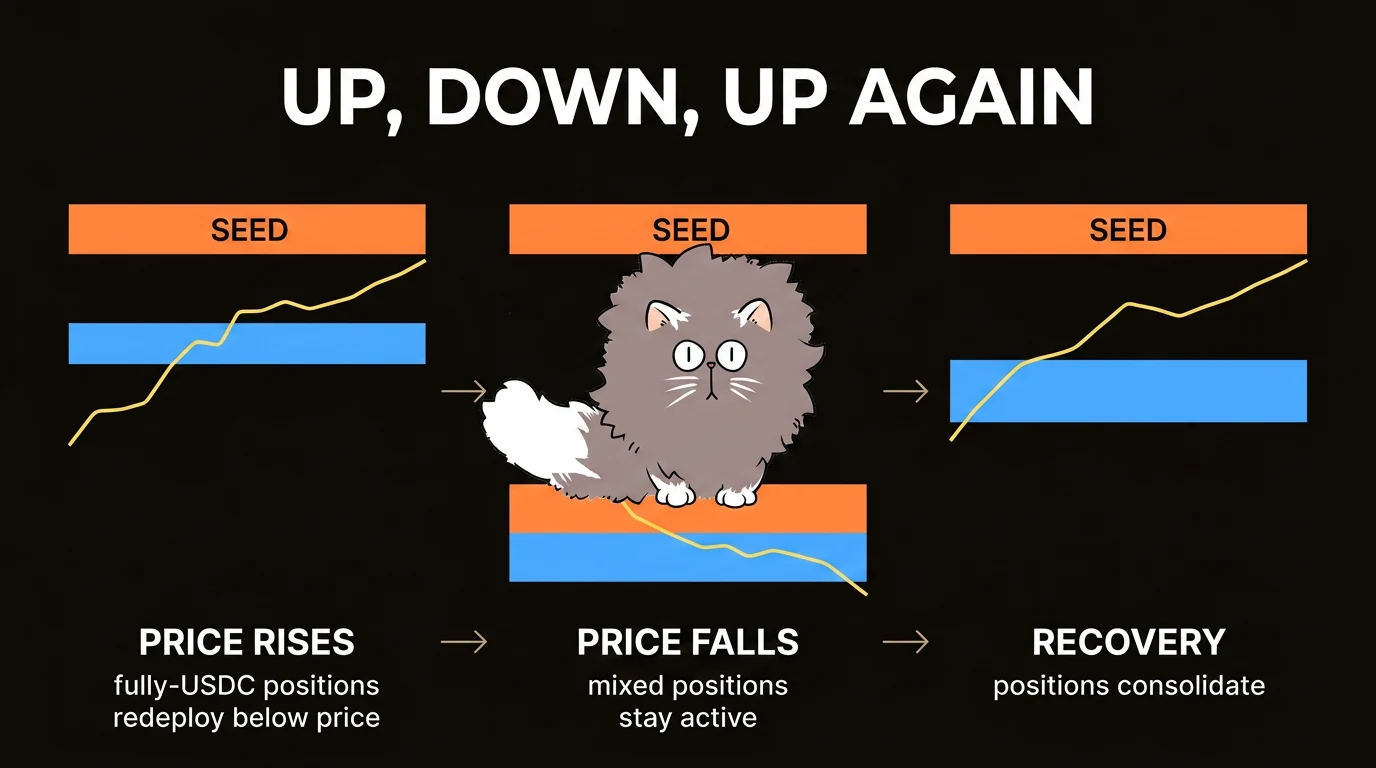
Buyers take WONTON from the seed. Positions left completely below price become fully USDC. At rebalance, that USDC is collected and redeployed beneath the new market level.
Sellers hit USDC liquidity. Crossed positions become mixed and remain active. When enough USDC is available, rebalance can add another position lower down.
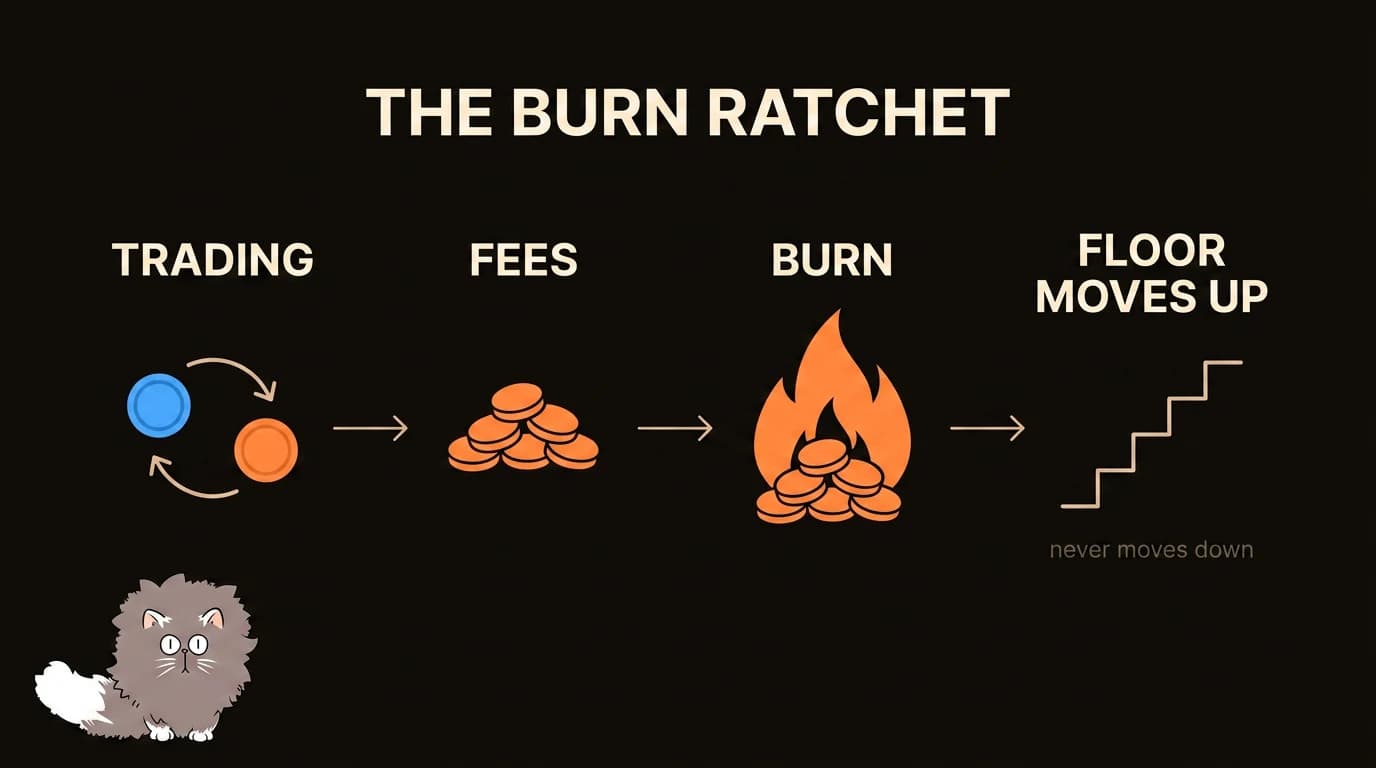
Positions earn fees in USDC and WONTON. During rebalance, the WONTON fee portion is burned permanently.
WONTON principal still working inside live liquidity is not burned. The machine only destroys WONTON it earned as fees.
The seed keeps serving buyers. Mixed positions keep serving the market. Fully-USDC positions can move up at rebalance. Activity reinforces the buy side while fee burns reduce supply.